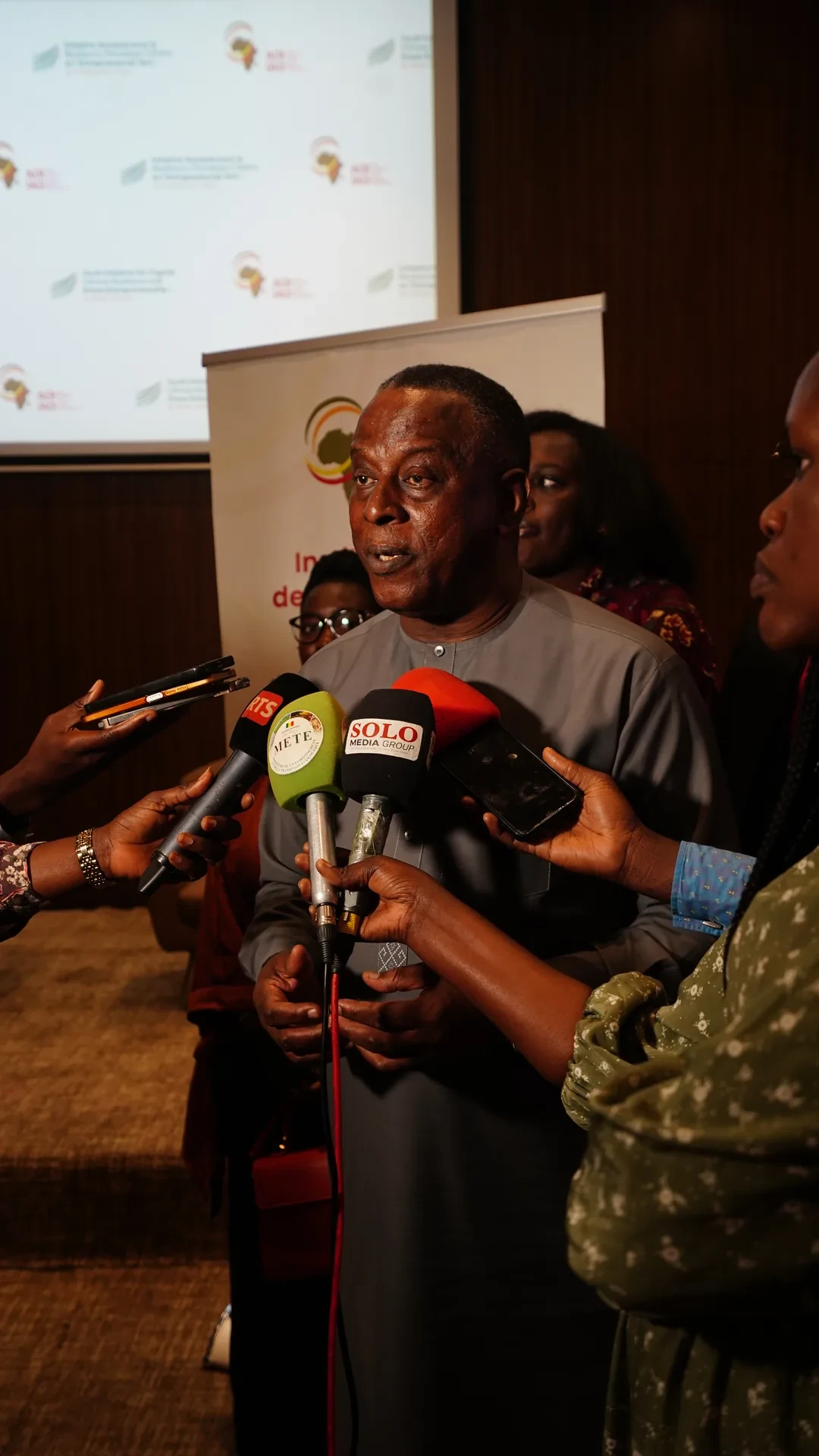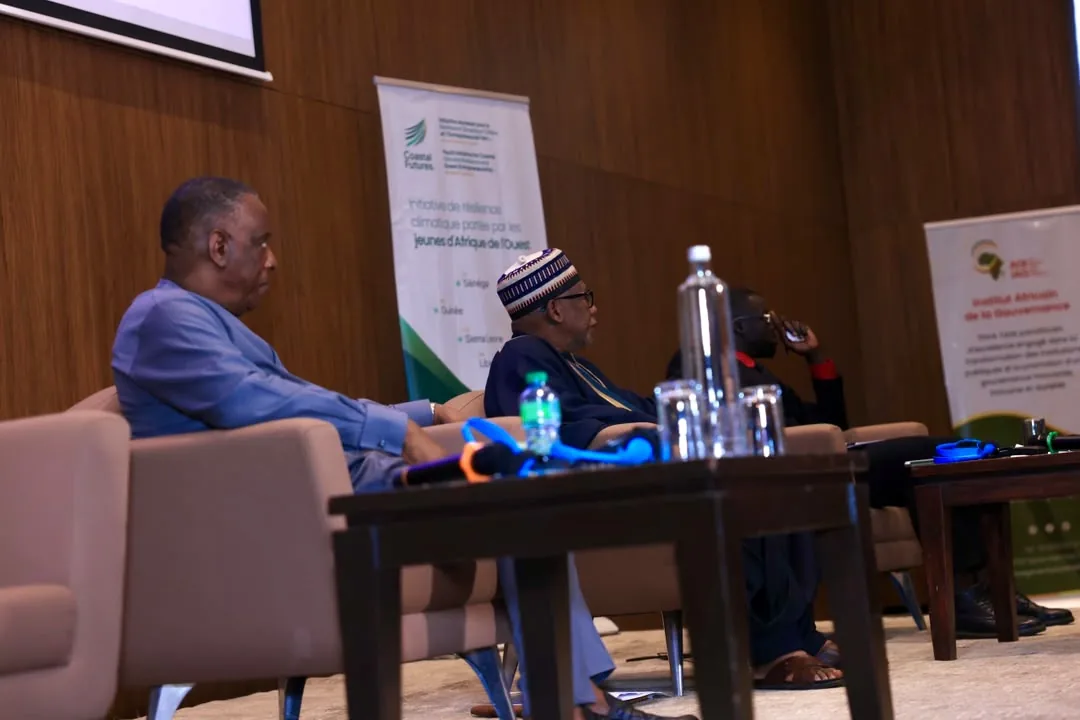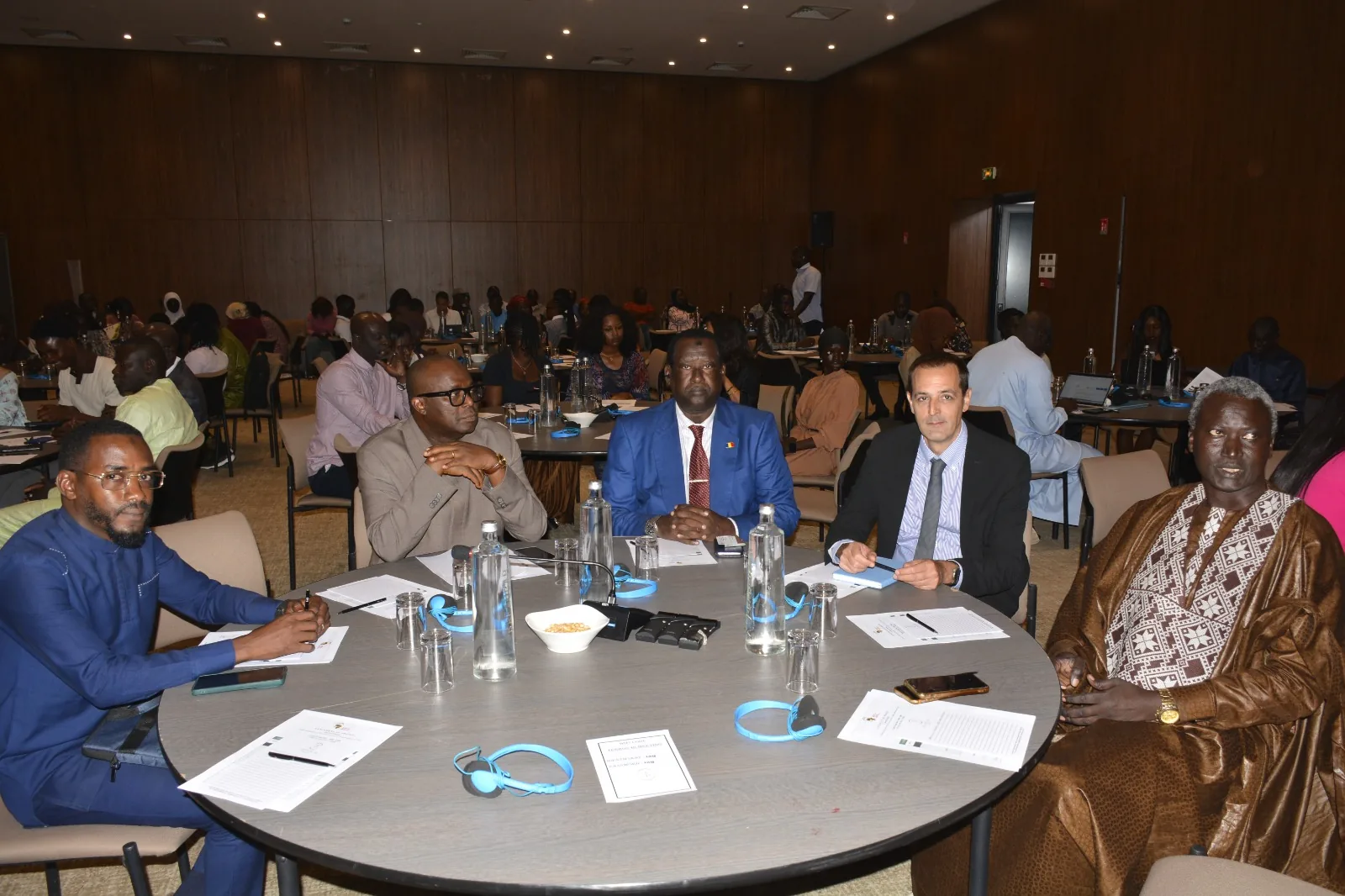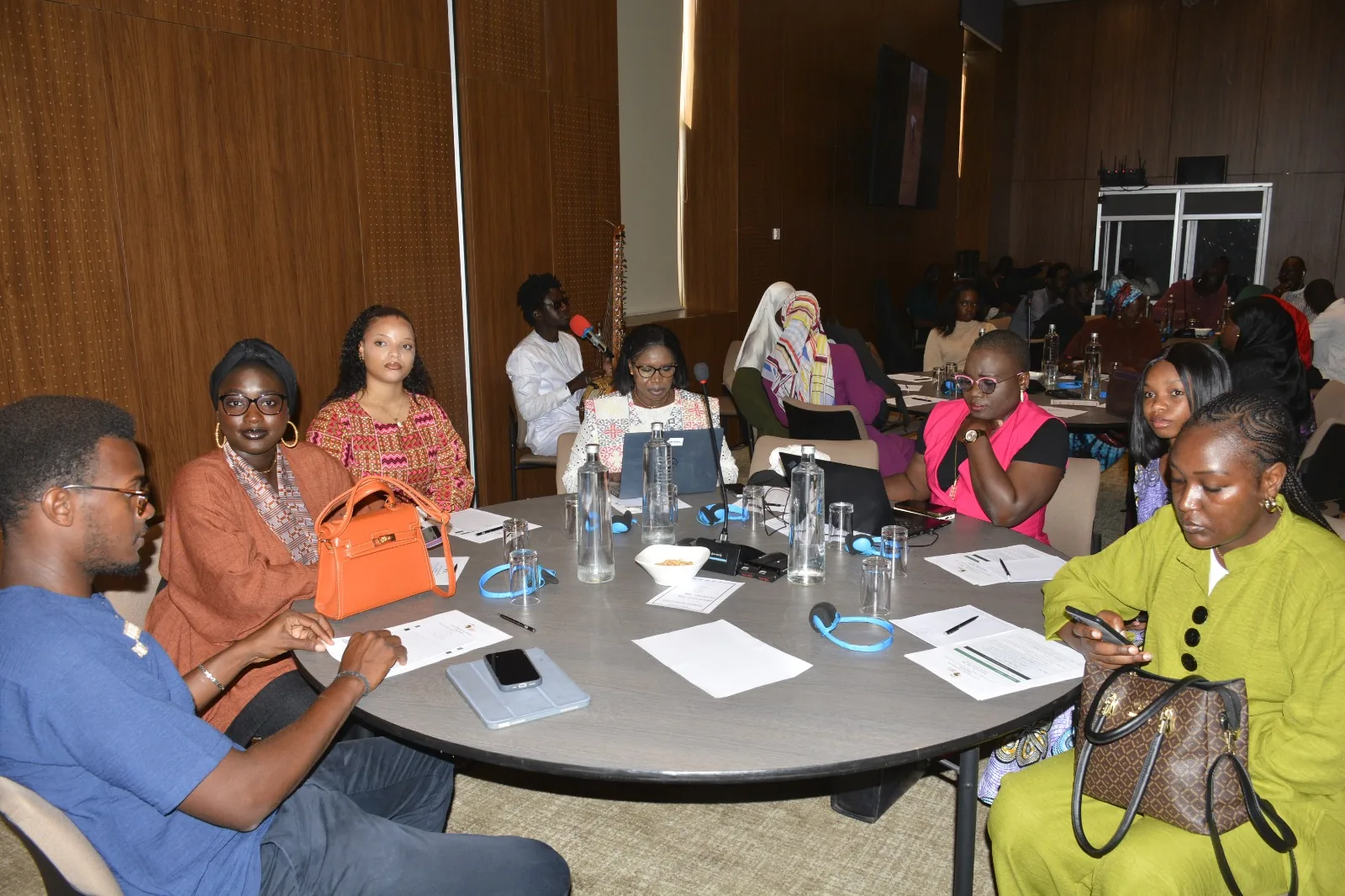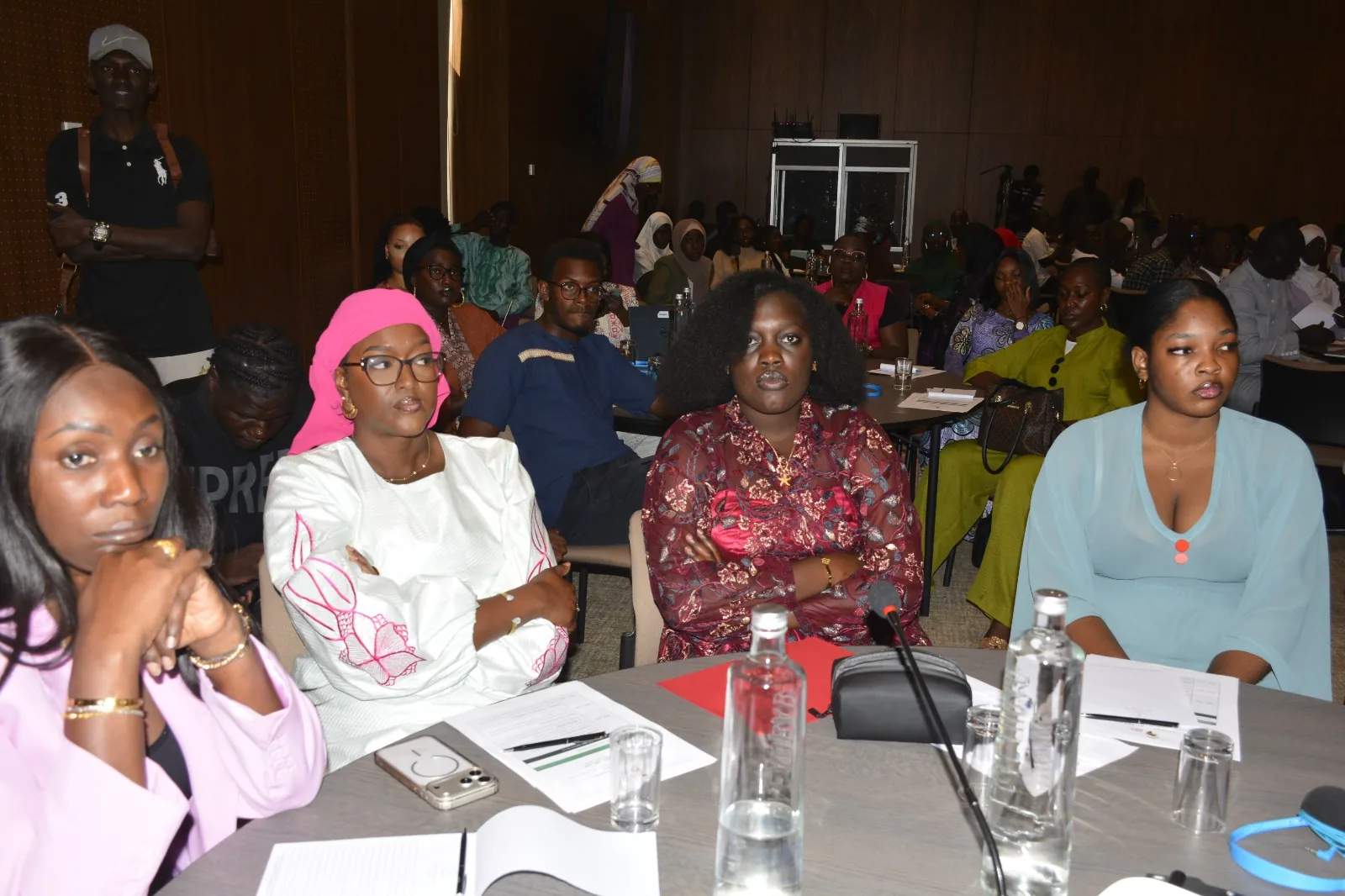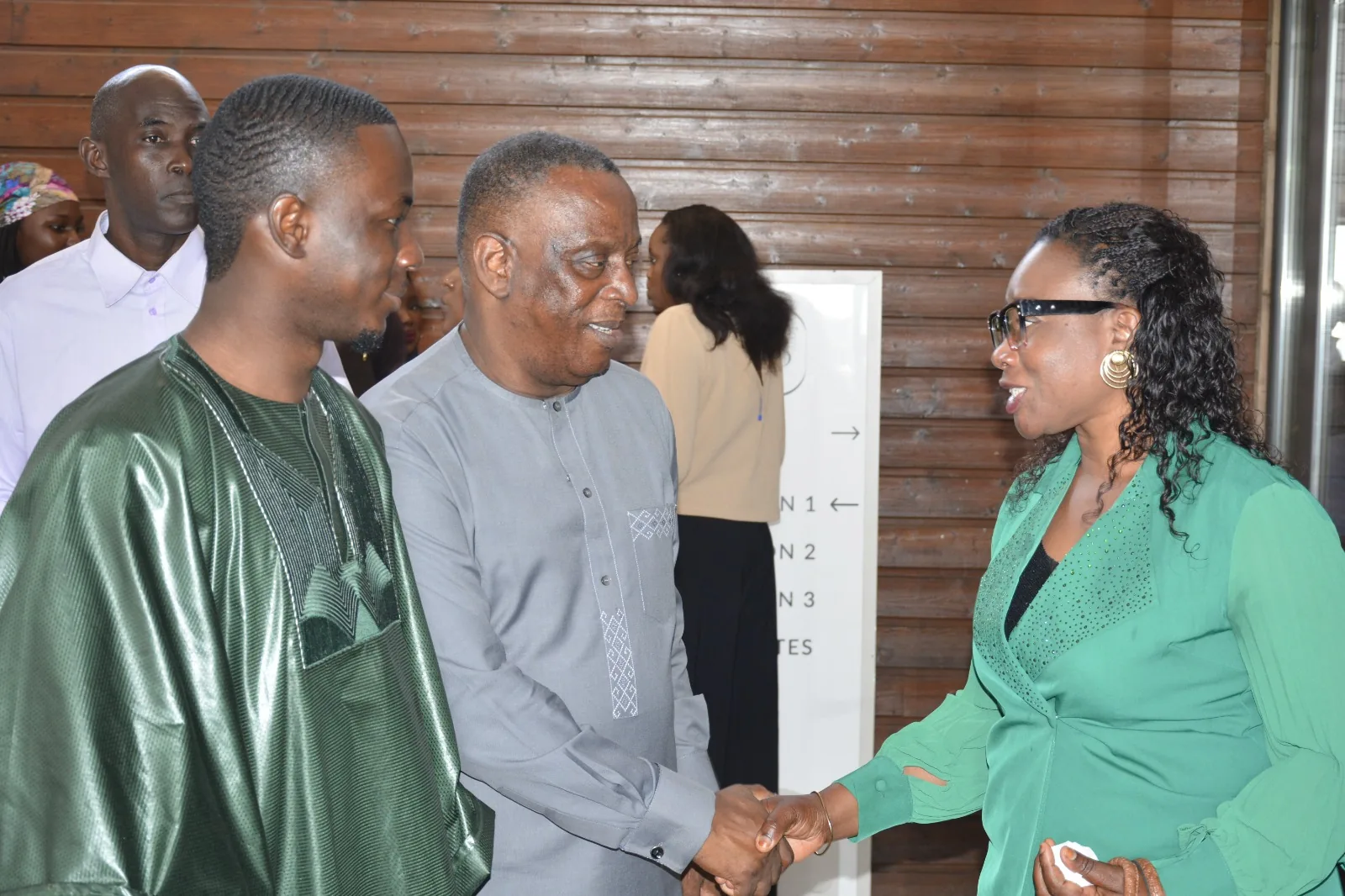

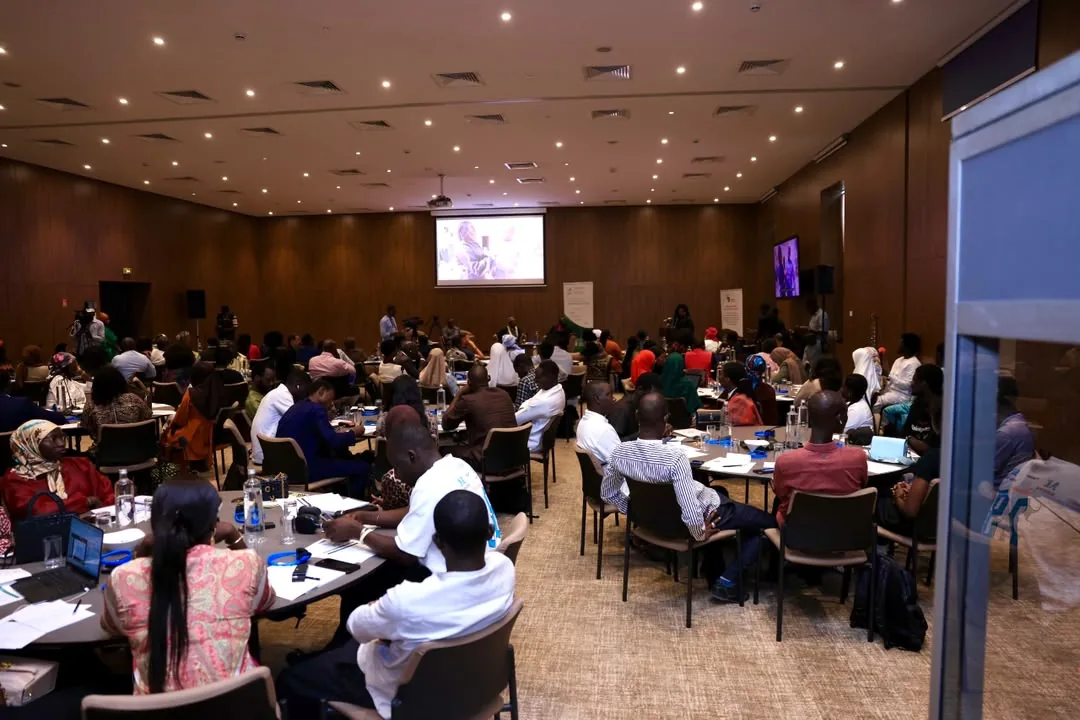
The Coastal Futures launch day, held on 10 June 2026 in Dakar under the banner of World Environment Day, marked the programme's official move from design to collective commitment. Organised by the Africa Governance Institute at the Terrou-Bi Hotel, the ceremony brought together official delegations, technical and financial partners, diplomatic representatives and entrepreneurs around a shared roadmap for coastal resilience and green entrepreneurship.
The day was structured around a highly symbolic opening ceremony, a youth tribune, an inaugural keynote, two thematic panels, a green entrepreneurs showcase and an official closing titled "The Dakar Call".
The compass for the day
In West Africa, the challenge is not a financing gap but a gap in operational capacity. This reading, set out by AGI's Director General, guided the whole of the proceedings.
The outlook that emerged sketches a 2026-2027 roadmap built on three axes: institutional anchoring in the five countries of intervention, effective connection to international climate finance mechanisms, and the scaling of local entrepreneurial initiatives already operational on the ground.
Why Coastal Futures
West Africa is among the regions most exposed to the effects of climate change, particularly along its coasts. According to the IPCC's sixth assessment report, average sea levels could rise from 0.44 to nearly one metre by 2100 depending on emissions scenarios. Satellite measurements show that the central-east Atlantic, spanning the Gulf of Guinea and the waters off Senegal and Ghana, is recording a sea-level rise of 3.90 mm per year, one of the highest on the continent.
Dependence on the coastal economy is even sharper at national level: in Senegal, one in five working people is employed in the fishing industry; in Sierra Leone, the fisheries sector provides 80% of animal protein intake; in Ghana, the sector employs 2.6 million people directly or indirectly; in Guinea-Conakry, artisanal fishing is the primary livelihood for nearly 200,000 people.
It is in this context that AGI designed Coastal Futures: a regional initiative for coastal climate resilience and green entrepreneurship for West African youth, covering Senegal, Guinea-Conakry, Sierra Leone, Liberia and Ghana. Its architecture combines training, business incubation, nature-based solutions and policy advocacy, positioning coastal youth as central actors in regional resilience rather than mere aid beneficiaries.
Held under the patronage of World Environment Day with the institutional support of the Ministry of Environment and Ecological Transition, the ceremony pursued four objectives: the legal anchoring of the programme, the convergence of public, private and civil-society actors around the roadmap, international advocacy to amplify the African voice, and the creation of direct dialogue between investors, climate funders and young entrepreneurs.
A political opening
The day opened in a carefully crafted atmosphere, carried from the welcome by the sound of the Kora, a symbolic choice that immediately set the cultural and identity frame in which Coastal Futures intends to act. The screening of a video manifesto was the first strong act of a day conceived as a turning point.
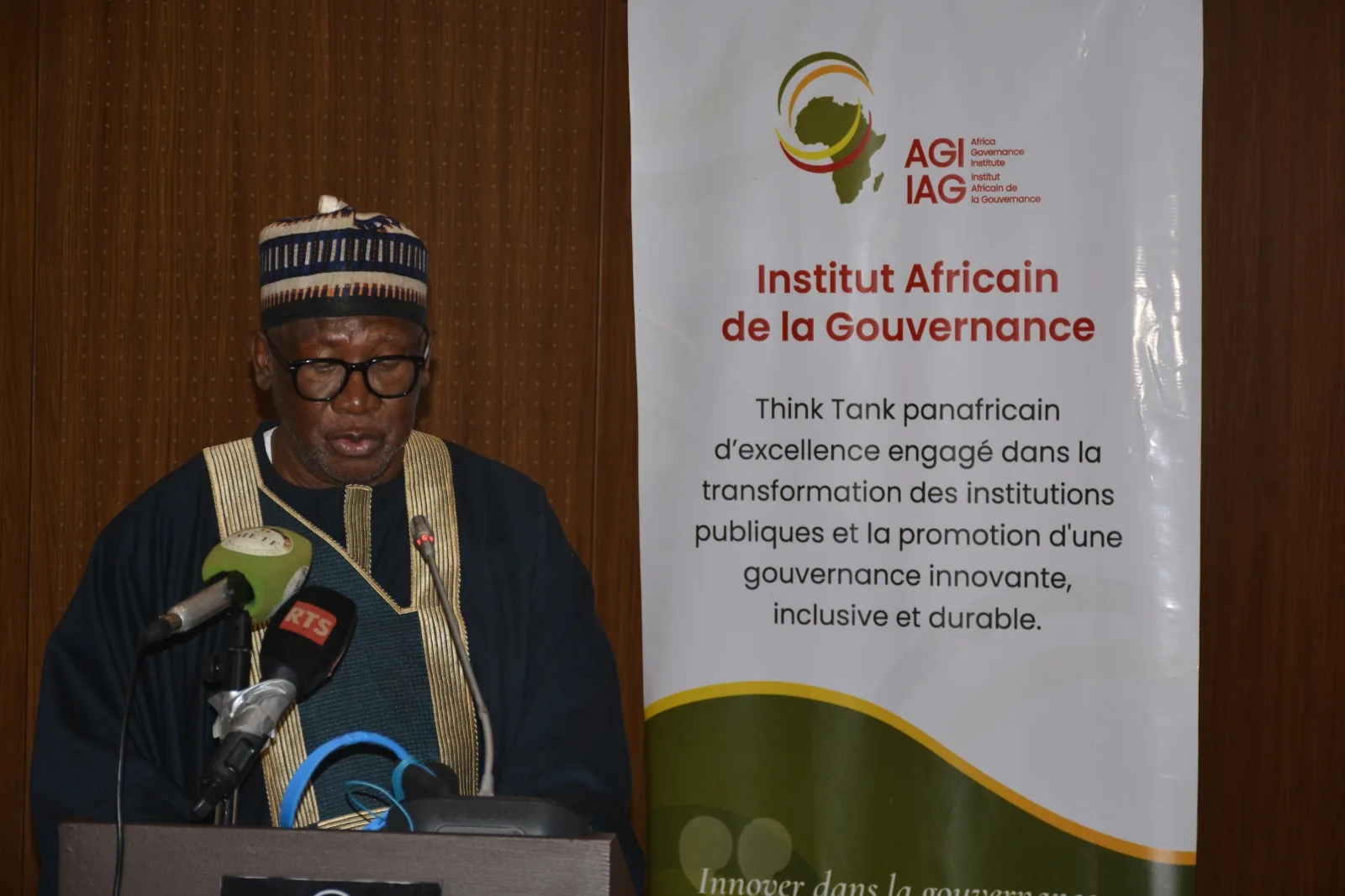
Dr. Cheikh Tidiane Gadio opened the proceedings with an intervention that immediately raised the day to another level. Rejecting the logic of withdrawal, which he called a luxury Africa cannot afford, he presented himself as a voice for the struggles of youth. Invoking Cheikh Anta Diop to recall that Africa is the cradle of civilisation, he struck with his figures: 600 million Africans without access to electricity, 200 million exposed to famine. His call: structural, unifying African leadership, anchored in continental memory.
The Honourable MP Ousmane Ciss grounded his address in the geographic and economic reality of the coast, documenting the nearly two-degree temperature increase in Senegal and laying out the cases of Bargny, Saly and Saint-Louis as so many symptoms of a single affliction running through the five countries of the programme. His call was direct: youth are the solution, and green entrepreneurship is its leading vehicle.
Dr. Abdoulie Janneh, Director General and Chair of the Board of AGI, closed the opening sequence with a speech that served as a compass for the whole day.
The problem in West Africa is not a financing problem, but one of operational capacity. Dr. Abdoulie Janneh, DG and Board Chair of AGI
That formulation placed Coastal Futures in its systemic dimension: an initiative that does not merely train young people, but positions them as full economic actors in the fight against climate change.
Voices from the coast
Before the panels opened, the floor was given to those most directly concerned: the young people and women of coastal communities. A video testimony from Bargny placed the human at the centre of the debate, illustrating the daily life of residents facing the advancing sea, irregular migration as a default horizon, and the structural effects of climate change on their livelihoods.
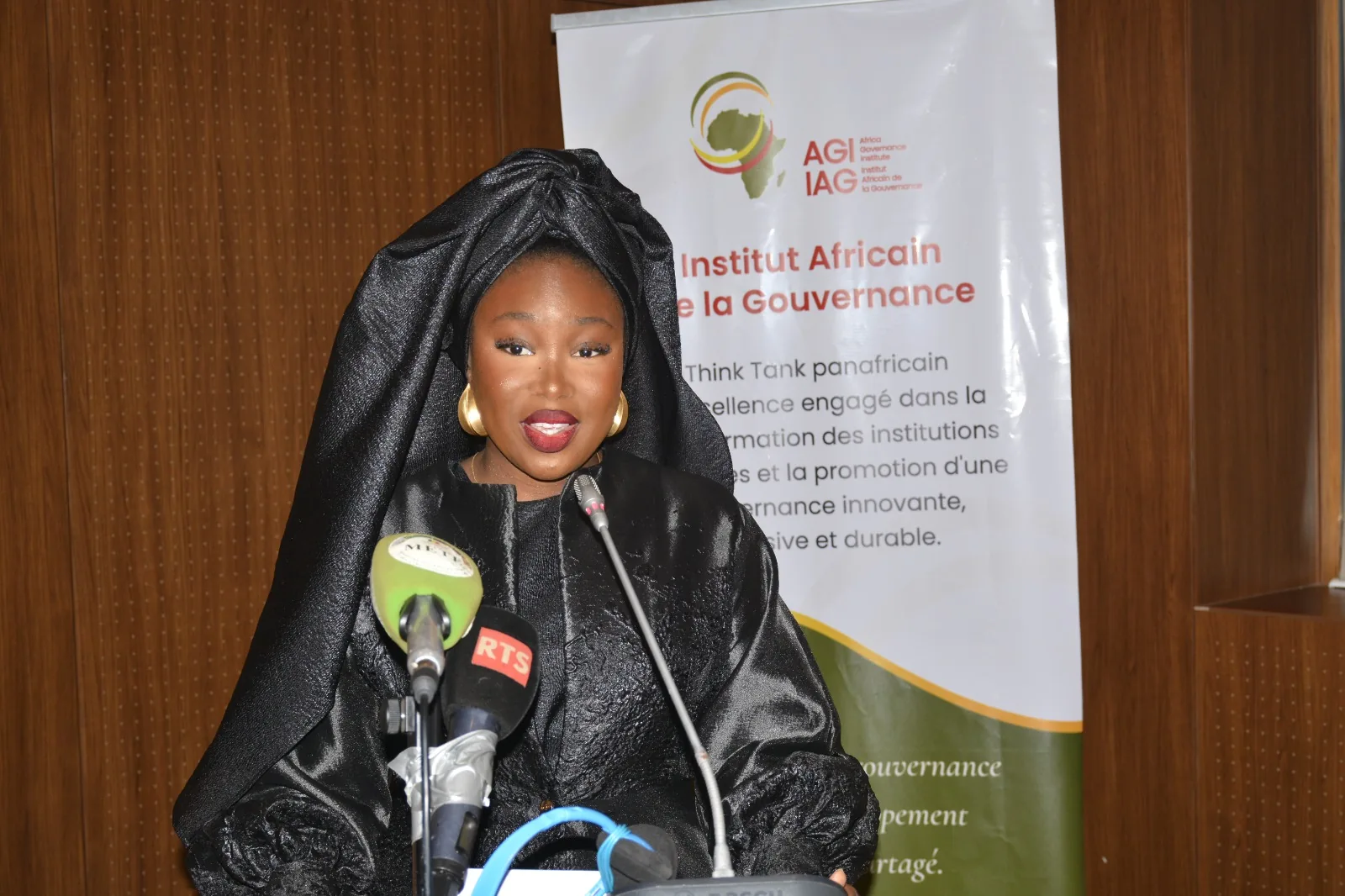
Fanta Camara, Head of the Climate and Youth Cluster at AGI, recalled that 100 million people live along the West African coasts, a young, exposed population whose transformative potential remains largely untapped. She presented the Climate Innovation Hub as the central support mechanism, "a concrete framework for young promoters of green and blue projects, from idea to implementation." Her message: young people are not witnesses to climate change, they are its actors.
Ms. Diouma Diouf, Director of Accounting and Coordinator of the Sustainable Finance Project Team at Crédit Mutuel du Sénégal, introduced the panel sessions. For her, climate change is no longer a projection: it already affects economies, territories and populations. Talent and innovation, she argued, are not enough without financing, without solid public-private partnerships, and without a structured regulatory framework. Green entrepreneurship is not one option among others, but a development strategy in its own right, capable of absorbing the waves of young people arriving each year on a saturated labour market.
Two panels, one conviction
The first panel, "Green entrepreneurship, a solution to youth unemployment and a lever for climate resilience in West Africa," moderated by Ms. Saran Kaba Wagué, brought together four speakers with complementary profiles: Ms. Yacine Sarr (AgroTrip), Mr. Steven Moussa (social entrepreneur and farmer), Mr. Makhoudia Ndiaye (International Labour Office) and Mr. René Édouard Mendis (Social Change Factory).
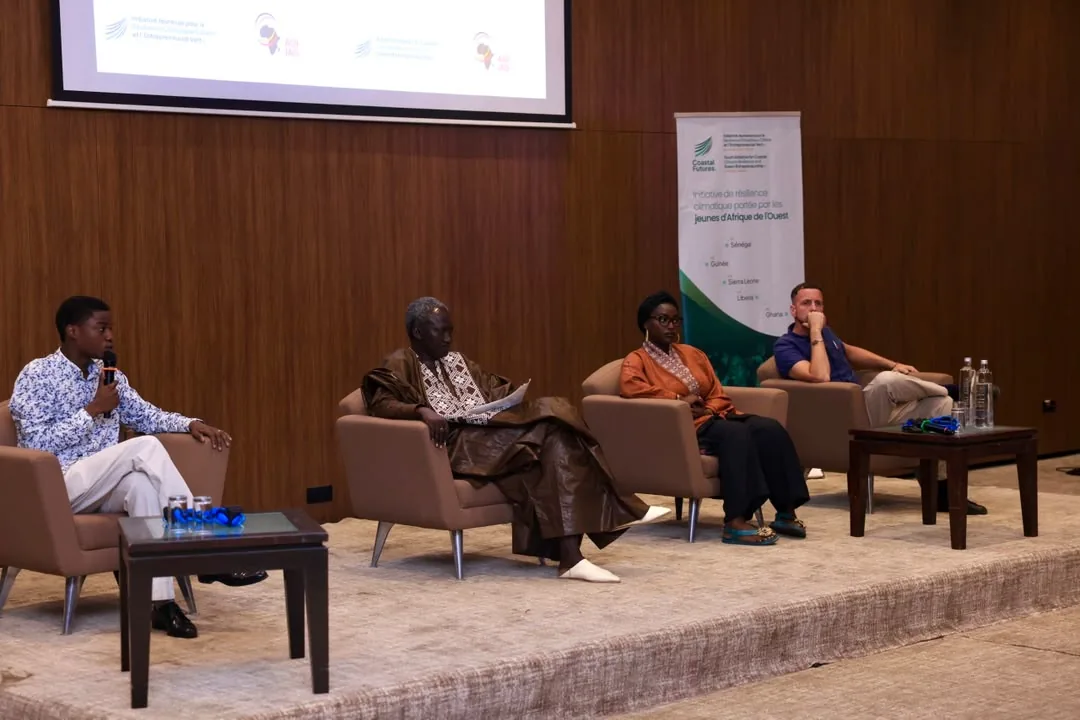
Mr. René Édouard Mendis argued for a genuine paradigm shift: young people must no longer be seen only as beneficiaries of public policy, but as full actors in climate solutions. Mr. Steven Moussa addressed the monitoring of funding, citing the case of coastal populations in Sindou who were resettled after the sea advanced, some of whom preferred to sell their plots and return to the risk zone for lack of social support.
Ms. Yacine Sarr detailed the obstacles facing young green entrepreneurs: low recognition of green trades in the education system, overly theoretical training, sociocultural barriers weighing on women, difficulties accessing finance and competition from imported goods. Mr. Makhoudia Ndiaye recalled that the Paris Agreement remains a central reference framework and that green entrepreneurship represents a real opportunity to create sustainable jobs, provided social dialogue, worker protection and green value chains are strengthened together.
A strong conviction emerged from the exchanges: the priority is not to wait for a major financing plan, but to create an appropriate regulatory framework now, invest in awareness and give young people the tools to enter the green transition. The green entrepreneurs showcase illustrated this with Bio Tito, led by Mbengue Ndiaye, a student at the University of Bambey: facing the degradation of nearly 60% of Senegal's farmland, the initiative turns coastal oysters into liquid fertiliser, a natural alternative to chemical inputs.
The second panel, "From fragile coasts to sustainable markets," also moderated by Ms. Saran Kaba Wagué, brought together Ms. Hind Aissaoui Bennani (International Organization for Migration), Mr. Aziz Diedhiou (Banque Agricole du Sénégal) and Ms. Habsatou Ndiaye (BSB Bio).
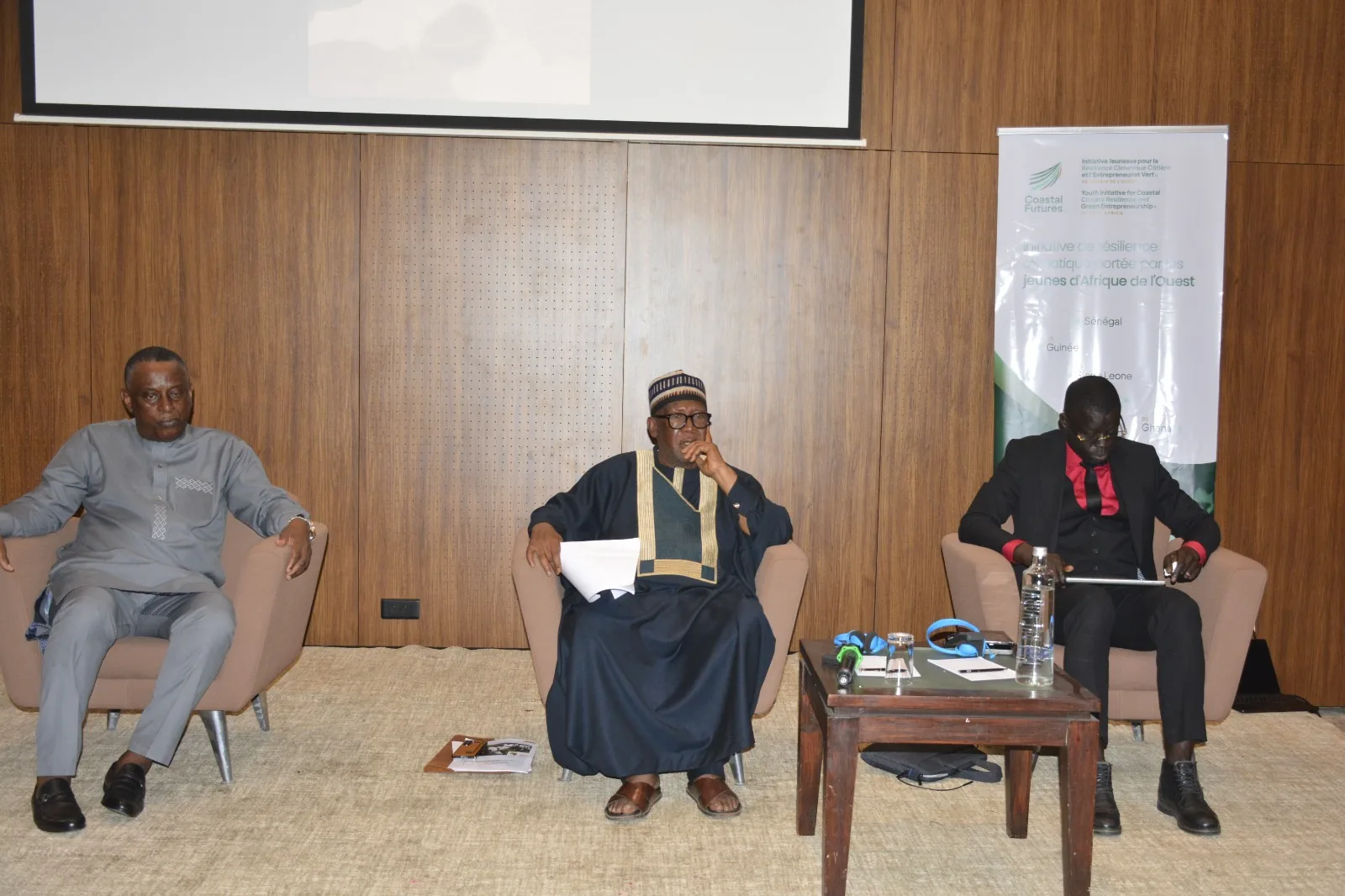
Ms. Hind Aissaoui Bennani placed green entrepreneurship within the dynamics of climate migration, describing school infrastructure in Sierra Leone partially swallowed by rising waters. According to the World Bank, several tens of millions of people could be forced to move within their own countries by 2050. Ms. Habsatou Ndiaye presented BSB Bio's work valorising Typha australis, an invasive plant in the Senegal River basin that women's groups turn into construction materials and fuel: "an environmental constraint can become an economic opportunity; a neglected resource can become a source of dignity."
Mr. Aziz Diedhiou highlighted the undervalued potential of agricultural, forestry and marine value chains, notably in the Saloum, and argued for strengthening women's entrepreneurial capacities. His intervention confirmed the existence of active financing lines within Banque Agricole du Sénégal, notably in partnership with the French Development Agency, and announced that a new mechanism involving the Green Climate Fund was being finalised.
The closing: the Dakar Call
The closing words of AGI's Board Chair deliberately broke with the conventions of institutional speech. Choosing a sober, non-discursive posture, he made that restraint itself an act of communication: showing enthusiasm rather than putting it into words, letting the day speak for itself.
This is a framework that is widening today. Closing words, Board Chair of AGI
Coastal Futures is no longer contained within its founders alone: the day widened the circle of stakeholders, commitments and possibilities. By declaring himself a feminist and affirming his support for women's initiatives, the Board Chair inscribed gender equality not as one thematic strand among others, but as a governance commitment. He paid solemn tribute to Maty Ndiaye Cissé, Director of Programs at AGI, saluting her leadership and vision in the design and implementation of the initiative.
Commitments and outlook
The day gathered institutional commitments whose scope goes beyond the usual protocol of inauguration ceremonies. The country lead of Tree AID expressed his organisation's commitment to supporting the project's roll-out in the countries of intervention, bringing field expertise in agroforestry and the restoration of coastal ecosystems that complements AGI's governance mandate.
Mr. Aziz Diedhiou confirmed the existence of active financing lines in partnership with the AFD, covering projects on the resilience of marine and coastal ecosystems, and announced that a new mechanism involving the Green Climate Fund was about to be released. His intervention identified three priority levers for AGI: the development of local trust funds, guarantee mechanisms tailored to small entrepreneurs, and active intermediation between international climate-finance resources and grassroots project promoters, with an explicit mention of the Locally Led Adaptation mechanism.
These two commitments illustrate the convergence the day set in motion: on one side, a field operator rooted in local ecosystem realities; on the other, the beginnings of an institutional financial partnership with concrete levers for activating climate finance. It is precisely the articulation of these two registers, operational capacity and access to resources, that Coastal Futures will have to consolidate in its 2026-2027 roadmap.
Recommendations
The proceedings produced five families of consolidated recommendations.
- Governance and public policy. Strengthen the presence of young people in climate decision-making bodies and operationally embed the NDCs and NAPs in public policy, with translations into local languages and increased resources for environmental technical services.
- Training and support. Prioritise practice and field immersion, integrate environmental education into school curricula from an early age, and develop mentoring mechanisms.
- Financing green entrepreneurship. Simplify access to finance for young people and women without abandoning rigorous monitoring, and develop trust funds, guarantee mechanisms and proximity financing.
- Inclusion of women. Translate the feminist commitment into the programme's governance, ease women's access to finance and ensure equitable representation in decision-making bodies.
- Valorising local resources. Support and scale recycling and natural-resource transformation initiatives, such as Typha australis or coastal oysters, within a sustainable approach that includes monitoring and upkeep.
Report on the launch ceremony of Coastal Futures, the Youth Initiative for Coastal Climate Resilience and Green Entrepreneurship in West Africa. Africa Governance Institute, Dakar, June 2026.